Global trade used to be boring. It was predictable. Containers moved. Tariffs stayed low. Business flowed efficiently. Those days are gone. In the current economic cycle, trade policy has become a weapon. The United States has implemented a new, aggressive tariff regime. This is not just a political headline. It is a structural shift in the global economy. For two decades, supply chains leaned on efficiency. Now, they must lean on resilience.
Effect on Global Market.
New levies target key manufacturing hubs to protect domestic industry. However, the ripple effects extend far beyond American borders. Importers face rising costs. Currencies fluctuate wildly. The “Global Factory” model is breaking down. This analysis explains the mechanics of the current trade conflict.
- It outlines who pays the price.
- It details how smart capital moves to dodge the blow.
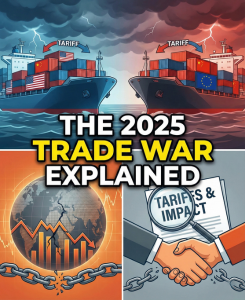
The New “Iron Curtain” of Tariffs.
Tariffs are taxes. But they function like a wall. New policies place steep levies on specific goods. Steel, aluminum, EVs, and semiconductors face the hardest hits. The primary target remains Asia. However, the net has widened. European luxury goods and South American raw materials now face scrutiny.
The Cost Reality.
- A common myth exists about tariffs.
- Politicians often claim the exporting country pays.
- Economists know the truth.
The importer pays.
When a container lands in Los Angeles, the US company writes the check. That cost goes directly onto the balance sheet. It eats into gross margins immediately. Consequently, businesses face a binary choice. They can absorb the cost and accept lower profits. Or, they can pass the cost to the consumer. Most are choosing the latter. This keeps inflation stubborn. It forces central banks to keep interest rates higher for longer.
The Currency Shock.
Trade wars are never just about goods. They are about money. When the US raises tariffs, it disrupts currency markets. This phenomenon is called the “Safe Haven” effect.
- Investors get nervous about global growth.
- They sell risky assets.
- They buy US dollars.
- Consequently, the dollar strengthens.
- This sounds good for American tourists.
It is terrible for American exporters. A strong dollar makes US goods expensive abroad. It hurts multinational earnings.
The Emerging Market Squeeze.
The pain is acute in emerging markets. Nations like Brazil, Turkey, and Indonesia often borrow in dollars. When the dollar rises, their debt gets expensive. Their local currency crashes. You can check the World Bank report. Importing raw materials becomes unaffordable. This creates a cycle of instability. Global supply chains rely on these nations for inputs. If they cannot pay bills, factories stop running.
The Great Supply Chain Pivot. Disclaimer
Risk managers are not sitting still. The era of “Just-in-Time” inventory is over. The era of “Just-in-Case” has arrived. Corporate strategy has shifted from efficiency to diversification. This trend is known as “China Plus One.” However, it has evolved into “Anyone But China.” The Winners of the War. Capital flows like water. When one door closes, another opens. Manufacturing is fleeing high-tariff zones. It is landing in “friend-shoring” destinations.
- Mexico: Proximity to the US market makes it a top choice.
- Vietnam: Electronics manufacturing has surged here.
- India: Large-scale assembly for tech giants is moving to Bangalore.
This migration is not cheap. Building new factories takes time. Training new workforces takes money. However, the cost of not moving is now higher. Staying put means paying the tariff. Moving means survival.
The Consumer Impact.
Ultimately, the bill lands on the shelf. Retailers operate on thin margins. They cannot absorb a 10% or 20% tax. Therefore, prices rise. This impacts specific sectors more than others.
- Electronics: Laptops and phones face direct price hikes.
- Autos: Parts become expensive, raising repair costs.
- Apparel: Fast fashion faces delays and duty spikes.
Inflation data often hides these specific shocks. The headline number might look stable. But the price of imported goods tells a different story. Purchasing power erodes silently.
Strategic Responses for Business.
Complaining about policy changes nothing. Adapting changes everything. Successful firms take specific steps to mitigate damage. Every product has a Harmonized System (HS) code. Tariffs apply to specific codes. Sometimes, a product is misclassified. A simple review can save millions. Smart teams hire customs brokers to audit catalogs. They ensure the firm pays the right rate, not the highest rate.
Currency Hedging.
- Exchange rates are volatile.
- CFOs use forward contracts.
- These lock in currency rates for the future.
- It removes the uncertainty of a rising dollar.
- It turns a variable risk into a fixed cost.
Diversify the Supplier Base.
Reliance on a single factory is a liability. Resilient firms split orders. They source 60% from a primary vendor. They source 40% from a backup in a different country. If a trade war hits one nation, the other keeps shipping. The current trade conflict is not a temporary event. It is the new operating system for global business. Protectionism is rising. Globalization is retreating. The winners will not be companies with the cheapest prices.
The winners will be companies with the smartest supply chains. Understanding the mechanics of tariffs is no longer optional. It is a survival skill.
Disclaimer.
Admin is a market strategist. I am not an insurance agent. I am not a financial advisor. Rules change by state. Rules change by industry. Always talk to a licensed pro before you buy anything.
Thanks for your service