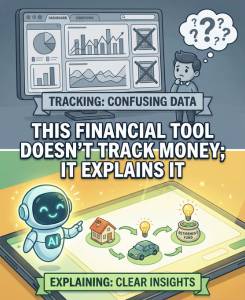
Financial tools usually just track where the money goes, but this one actually tries to explain it. After thinking about market strategy for what feels like forever, though it’s only twenty-five years, you learn something harsh. Most statements are like looking back in the rearview mirror. They tell you exactly what happened, all precisely and historically.
Financial Tools Only Track Flow.
But that does not help pay the bills coming up next week. Businesses keep staring at the right data while they are losing cash. The info is accurate, sure. The problem is the view they have on it. So they track the money but do not explain why it moves like that. In today’s economy, you need to look ahead to survive. Tools that change how people act before the account empties out.
The Fiction Of Profit
However, profit and loss statements can trick you. They look like success but might not be real yet. It’s all accrual-based, counting revenue when you send the invoice, not when cash shows up. A company could seem super profitable on paper one day and broke the next. That happens more than you would think.
Cash Flow Model
The thirteen-week cash flow model skips that fake profit stuff. It only looks at actual cash coming in and out, the timing issues. That gap between paper and reality is what kills growing companies quietly. On the surface, the model seems like a simple spreadsheet, something for treasury. People dismiss it easily, but that is a big error.
Explaining Behavior, Not Just Math.
Strategists who know better see it as a way to change behavior, not just do accounting. Accounting is backward-looking. This model points forward, filling the space between profits on paper and real money. Profit is just an idea. Cash is what matters, the facts three months ahead.
So, strategists who know better see it as a way to change behavior, not just do accounting. Accounting is backward-looking. This model points forward, filling the space between profits on paper and real money. Profit is just an idea. Cash is what matters, the facts three months ahead.
The Psychology Of Spending
Spreadsheets do not spend the money. People do; their decisions do. A yearly budget sets limits once, but the thirteen-week forecast updates every week based on what is really happening. It makes you ask tough questions right away. Not just noting a cash shortage in week nine, but why is it there?
- However, in 2025, with all the shocks, this tool feels even more necessary. Things change fast, like trade wars. Tariffs hit costs suddenly for whole sectors. A regular P and L might not show the damage for months. Supply chains are messy now, full of obstacles. Inventory was bought too much, or collections are slow, or some big spend was timed wrong.
- The model turns numbers into real actions by people.
- Executives cannot hide behind excuses like seasonality.
- So, they have to face the operations as they are.
The 2025 Trade War Context.
In 2025, with all the shocks, this tool feels even more necessary. Things change fast, like trade wars. Tariffs hit costs suddenly for whole sectors. A regular P and L might not show the damage for months. So, supply chains are messy now, full of obstacles. Tariffs act like cash taxes paid right away, not when you sell. So, that drains working capital hard. But the model spots the extra cash needed for customs next month and warns you early. Management has to move, raise prices, cut back, or find more liquidity before it hurts.
FinCEN rules
If tariffs add fifteen percent to goods, cash goes out on import, and revenue waits ninety days maybe. Without seeing that valley coming, companies fall right in. Shocks are not just trade stuff. Regulations hit too, like the FinCEN rules in March 2025 on ownership. For more information, check FinCEN.
Foreign-Owned US LLC
But for foreign-owned US LLCs, it’s worse. FinCEN tightened up, making compliance a cash drain. Not just forms, but legal fees and changes that cost money unexpected. Penalties are bad, direct cash fines with no deductions.
The Foreign-Owned Entity Trap
Static budgets miss these, assuming nothing changes. But early 2025 killed that assumption. The model shows the hit before bills arrive and turns surprises into planned spends. Leadership can budget for lawyers now and avoid panic later. Panic always costs more.
Why thirteen weeks exactly? It is not too short, like one month, where problems show up after checks are sent too late. Or too long, like six months, which is just guessing in this volatile world. Thirteen is a quarter, the right distance. But far enough to spot trouble building and close enough to fix with actions today.
The Goldilocks Horizon
In practice, it is a weekly thing, not sitting idle. Update it each time, actuals from last week, roll forward. Variance is key, comparing the plan to reality. If receipts are ten percent off, why? Tell the story. Sales has to explain delays. That builds accountability. They learn promises are not cash, so they chase harder. It shifts the whole executive view. Cash is not just the CFO’s job anymore. Everyone uses it like a tool. Sales sees bad terms hurt later weeks.
Operations knows overstock burns cash needed soon.
Operationalizing the Model
- Marketing gets that spends need to match inflows. Departments stop siloing and act like one thing aware of cash. The best part is preventing crises before they start. Like radar for icebergs, turn easy.
- Without it, you swerve at the last minute, lose speed, and scare people. In 2025, stability matters big. Banks like steady; investors do too. The model makes things predictable and handles chaos better.
- It helps with credit too. Draw on lines when you choose, not desperately. See the dip in week seven; act in five calmly. Negotiate well. Emergency draws smell weak; banks tighten up.
- Advantages pile up. You see walls before crashing. Adjust spending to next month’s real budget, not the old budget. Departments own their cash effects. Budget for new regs. Survive tariffs without breaking.
Disclaimer.
Look, admins have been doing this strategy work for a while, but I am not your advisor or lawyer. Markets and rules like FinCEN or tariffs shift quickly. This is just to think strategic, not replace pros. Do your homework; talk to experts before big steps. It seems like that covers the main points, though some parts get messy to explain fully.